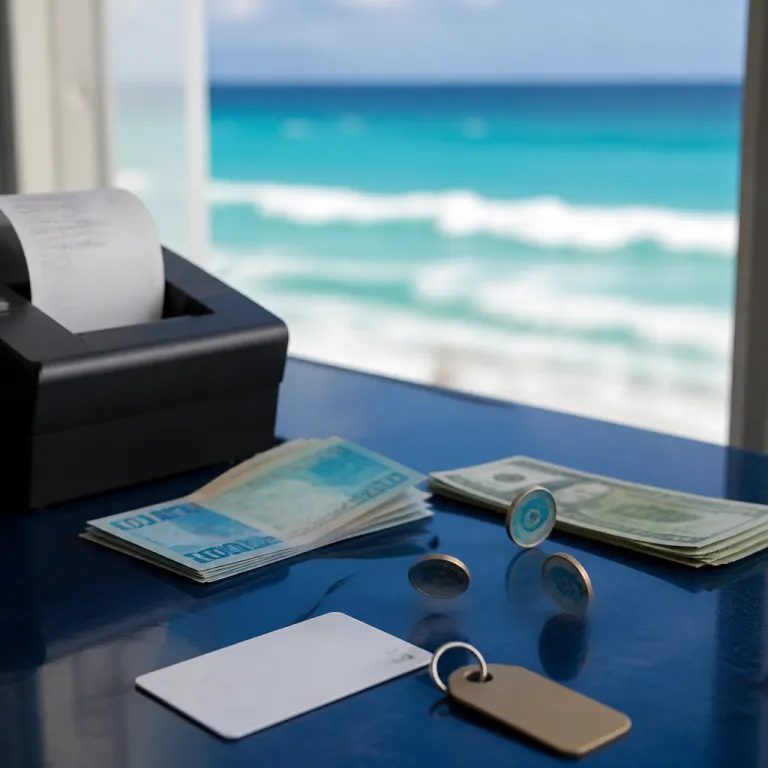
Aruba currency and hotel prices: how AWG and USD work for travelers
How Aruba currency works when you book and pay for hotels
On Aruba, the official currency is the Aruban florin, written as AWG or sometimes as Afl. Hotels quote room prices in different ways, and understanding how the local Aruba currency interacts with the United States dollar helps you compare offers with confidence. When you see a rate in USD or in florin, you are really seeing how that property interprets the prevailing exchange rate between AWG and USD, which is officially pegged at around 1 USD = 1.79 AWG according to the Central Bank of Aruba (CBA, reference rate consulted 2024).
Most larger resorts in Aruba list their room rates in US dollars, yet they settle staff salaries and many operating costs in Aruban florin, which quietly links your nightly price to mid-market conditions. This dual structure means that even if you pay in USD, the hotel’s internal accounting still tracks the value in AWG, so management watches the market exchange and adjusts seasonal offers when the exchange rates move. For you as a guest, the key is to check whether your confirmation shows a fixed USD–AWG exchange rate or whether the final bill will follow the daily exchange rate published by a local bank or the Central Bank of Aruba.
Smaller properties in Oranjestad or near Eagle Beach sometimes prefer to bill in AWG and then convert to USD for foreign guests at check-out. In those cases, the hotel may round the exchange rate slightly in its favour, which is legal but can add a few euros to a week’s stay if you are not attentive. For example, a 700 AWG bill (about 391 USD at 1 USD = 1.79 AWG) might be converted using 1 USD = 1.75 AWG, which lifts the total in dollars. Ask reception in advance whether they follow the official central bank reference rate for AWG–USD conversions or whether they apply their own internal rate with small fees built into the calculation.
Paying in usd or awg at your hotel: practical choices and hidden costs
When you arrive in Aruba, you can usually pay your hotel bill in either USD or AWG without difficulty. Front desks are used to handling both the dollar and the florin, and they often keep a simple AWG chart behind the counter to show the day’s exchange rate for transparency. Still, the way you choose to pay can influence the final amount once your home bank converts the transaction back into euros or another currency, especially when you look at Aruba hotel prices 2024 in your own budget.
If your card is issued in Europe, your bank will convert the hotel charge using its own exchange rates, which may differ slightly from the mid-market rate you see on a public currency chart. Some banks add a foreign transaction fee on every payment in USD, while others apply similar fees on payments in AWG, so you should check your card conditions before you travel. Because the Aruban florin is pegged to the dollar, the difference between paying in USD or AWG usually comes down to your bank’s margin and any extra fees, not to dramatic swings in the underlying exchange.
Guests who prefer to pay in cash sometimes withdraw USD from ATMs near Palm Beach, then settle the hotel bill directly in notes and coins. This approach avoids card surcharges from the hotel but can introduce separate ATM fees and a less favourable exchange rate if your home bank treats the withdrawal as a cash advance. For most travellers focused on Aruba currency and prices, a debit card with low foreign fees and billing in the local AWG currency offers the cleanest balance between convenience and cost, especially when the AWG to USD exchange rate in Aruba is stable.
Hotel extras, resort fees and how they relate to Aruba currency and prices
Room rates are only part of the story when you evaluate Aruba currency and prices for a beach holiday. Many resorts add daily resort fees, service charges or environmental levies, and these line items may appear in AWG even when the headline room price is in USD. Because these extras are often calculated as a percentage, small shifts in the exchange rate can subtly change the final amount you pay.
For example, a property might quote a nightly rate of 220 USD (about 394 AWG at the official peg), then add a 15 percent service charge and a fixed environmental tax denominated in Aruban florin. If the hotel converts that florin tax to USD using a slightly conservative exchange rate, the total in USD on your bill can end up higher than the figure you estimated at booking. To keep control, ask the reservations team to send a clear breakdown that shows which components are fixed in AWG and which follow the daily exchange rate published by the Central Bank of Aruba.
Guests booking all-inclusive packages should pay particular attention to how premium drinks, spa services and late check-out are priced. Some menus list cocktails in USD and snacks in AWG, while spa menus might quietly use Afl symbols without explaining that Afl stands for the Aruban florin. When you compare properties, convert all these extras into a single currency using a reliable mid-market exchange rate, then factor in any transfer fee or card surcharge your bank charges on foreign transactions.
Using banks, cards and money transfers to fund your Aruba hotel stay
Many travellers prepay part of their hotel bill before arriving in Aruba, especially for peak season stays along Palm Beach and Eagle Beach. Hotels may ask you to send money via card authorization, international bank transfer or a recognised money transfer service, each of which handles Aruba currency and prices differently. The method you choose affects not only the exchange rate but also the total fees you absorb on top of the room cost, so it is worth comparing options before you lock in Aruba hotel prices 2024.
When you use a traditional bank transfer from Europe or the United Kingdom, your bank converts euros or pounds into USD or AWG using its own market exchange table. On top of that, it may charge a fixed transfer fee, while the receiving Aruban bank can deduct additional fees before the hotel even sees the funds. Some guests instead use services such as Western Union or modern online platforms that reference the mid-market rate more closely, but these still build small margins into their exchange rates between pairs like GBP–USD or JPY–USD.
Hotels rarely accept direct payments in currencies such as peso or JPY, so any conversion from those currencies into USD or AWG happens before the money reaches Aruba. If you are sending a large deposit, ask the hotel whether they prefer funds in USD or in AWG, then compare the total cost of different send-money options using a clear currency chart. In many cases, paying by credit card in USD and letting your card issuer handle the conversion from EUR, GBP or JPY to US dollars is simpler than arranging separate money transfers through a bank or Western Union branch.
Daily prices on Aruba: what hotel guests actually spend
Once your room is booked, the next layer of Aruba currency and prices involves what you spend each day on the island. Cost of living data indicates that a single resident faces average monthly expenses around 1,860 euros (approximately 3,330 AWG at 1 EUR ≈ 1.79 AWG), which gives hotel guests a useful benchmark for everyday prices (based on aggregated cost-of-living indices such as Wise and Numbeo, accessed 2024). For travellers, that translates into restaurant meals, taxis, beach rentals and supermarket visits that are generally higher than in many mainland Latin American destinations but comparable to mid-range European coastal cities.
In resort areas, menus often show prices in USD, while supermarkets and local cafés lean toward AWG, so you will constantly move between the dollar and the florin. A casual dinner near Palm Beach might cost 25 to 35 USD per person (about 45 to 63 AWG), whereas a local snack in Oranjestad priced at 20 Afl reflects the same underlying exchange rate once you convert. Taxi fares from the airport to major hotel zones are usually quoted in USD, but drivers are comfortable accepting AWG coins and notes, using a stable exchange rate that tracks the official peg maintained by the Central Bank of Aruba.
Because Aruba imports much of its food and fuel, prices can respond to global market exchange conditions, especially when USD strengthens against other currencies. Guests arriving with euros, pounds or yen feel these shifts through the effective exchange rate between pairs such as GBP–USD, USD–JPY or JPY–USD when they check their card statements. To keep your budget predictable, set a daily spending limit in your home currency, then use a trusted currency app that reflects the current mid-market rate for AWG–USD conversions while you explore the island.
From Dutch guilder to Aruban florin: what this history means for today’s hotel guests
Understanding the history behind Aruba currency and prices helps explain why paying your hotel bill feels so seamless today. Before the Aruban florin existed, the island used the Dutch guilder, which tied local prices closely to the Netherlands and the wider Kingdom. When Aruba introduced the Aruban florin as its own currency, authorities chose to peg it to the USD, creating the stable AWG–USD relationship that underpins modern hotel pricing.
This peg means that when you see a room quoted at 400 Afl (about 224 USD at the official rate), you can mentally convert it to roughly the equivalent in US dollars without worrying about sudden swings. The Central Bank of Aruba manages this system, watching global market exchange movements and adjusting policy tools so that the exchange rate between AWG and USD remains predictable. For hotel operators, this stability simplifies long-term contracts with international tour operators, while for guests it keeps exchange rates and nightly prices easier to understand than in destinations where the local currency floats freely.
Today, the Aruban florin (AWG) is the official currency of Aruba and the U.S. dollar (USD) is widely accepted in Aruba. That simple reality allows hotels to publish rates in USD for international marketing while still paying local suppliers in AWG without complex hedging strategies. As a guest, you benefit from this dual system by being able to pay in the currency that suits you best, whether you carry USD cash, rely on cards that bill in euros or pounds, or use digital wallets that automatically track the latest exchange rates.
Key figures and statistics on Aruba currency and hotel related prices
- The average monthly cost of living for a single person in Aruba is around 1,860 euros (roughly 3,330 AWG), which indicates that everyday prices for food and services are closer to Western European coastal cities than to lower-cost Caribbean islands (data compiled from Wise and Numbeo cost-of-living indices, accessed 2024).
- Average rent for a one-bedroom apartment in the city centre is about 850 euros per month (around 1,520 AWG), a figure that helps hotel guests gauge the relative value of long-stay rates and serviced apartments compared with residential leases (data compiled from Wise and Numbeo rental benchmarks, accessed 2024).
- The average monthly net salary in Aruba is approximately 2,126 euros (about 3,800 AWG), which explains why service charges and resort fees are structured to support local wage levels while remaining competitive for visitors paying in USD or other strong currencies (data compiled from Wise salary benchmarks and public labour statistics, accessed 2024).
FAQ about Aruba currency and prices for hotel guests
What is the official currency of Aruba and what do hotels accept ?
The official currency is the Aruban florin, written as AWG or Afl, but hotels across the island widely accept USD for room bills and incidentals. Larger resorts often quote prices in US dollars while settling internal costs in AWG, using a stable exchange rate based on the peg managed by the Central Bank of Aruba. You can safely pay with major credit cards in either currency, though your bank will ultimately convert the charge into your home currency.
Are U.S. dollars accepted everywhere in Aruba hotels and restaurants ?
U.S. dollars are accepted in virtually all hotels, most restaurants and many shops, especially in tourist zones such as Palm Beach and Eagle Beach. Some smaller local businesses prefer payment in AWG, but they will usually take USD notes and calculate the amount using a clear AWG–USD exchange rate. Coins are generally given in Aruban florin, so you may receive change in Afl even when you pay in USD.
How do exchange rates affect my final hotel bill in Aruba ?
Because the Aruban florin is pegged to the USD, the AWG–USD exchange rate remains relatively stable, so your hotel bill in local currency does not fluctuate dramatically from day to day. The main variable is how your own bank converts that amount into euros, pounds or another currency, often using its own exchange rates and adding a transfer fee or foreign transaction surcharge. To minimise surprises, check your card’s fees in advance and compare them with the mid-market rate shown on independent currency tools.
Is it cheaper to pay my Aruba hotel in usd or in awg ?
For most guests, the total cost is similar whether you pay in USD or AWG, because the peg keeps the underlying exchange rate stable. The difference usually comes from your bank’s margin on the conversion and any fixed fees it charges on foreign currency payments. If your card offers better terms for transactions in USD, choose that option at the hotel, but if it treats all foreign currencies equally, paying in AWG can sometimes align more closely with the mid-market rate.
Should I bring cash or rely on cards for Aruba hotel expenses ?
Cards are widely accepted for hotel bills and most restaurant payments, making them the most convenient option for many travellers. Carrying a modest amount of USD cash is still useful for tips, taxis and small purchases, though you will often receive change in Aruban florin coins. To keep control of Aruba currency and prices, combine a low-fee card with a small reserve of cash, then monitor your spending using a currency app that tracks live exchange rates.
Worked example: how a sample Aruba hotel bill converts with bank fees
Imagine you book a three-night stay at 220 USD per night in 2024, plus a 15 percent service charge and a fixed 20 AWG environmental tax per night. The room total is 660 USD, the service charge adds 99 USD, and the environmental tax comes to 60 AWG (about 33.5 USD at 1 USD = 1.79 AWG), so the hotel bill is roughly 792.5 USD. If your European bank then converts that amount into euros at 1 EUR = 1.10 USD and adds a 2 percent foreign transaction fee, you pay about 720 EUR for the stay, plus around 14.4 EUR in fees, which shows how bank margins and card charges can matter more than small shifts in the AWG–USD rate itself.
